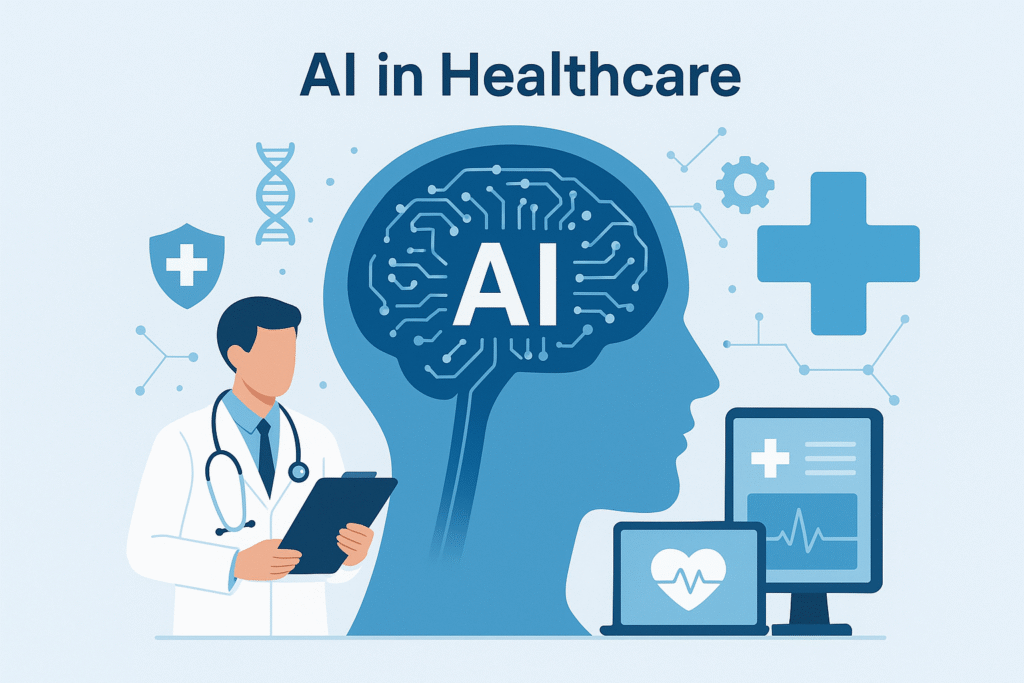
The powerful integration of AI in healthcare India has been tremendously elevating conventional diagnosis and treatments. Among the most serious and time-bounded health condition emergencies, heart attack (also known as myocardial infarction) has remained one of the leading causes of deaths worldwide.
However, recent revolutionary development through Artificial Intelligence has improved diagnosis and predictive cardiology practices. Here, the role of AI in healthcare may enable physicians to identify and can even prevent before the symptoms appear.
Tech innovators and health institutions worldwide have started collaborating together to successfully develop AI-enabled tools that can forecast cardiac arrest in patients. The growing investment and research in predictive analytics have made it possible to predict such heart attack events with better accuracy.
The advanced predictive tools may still require some more improvements, but in near future, it is highly likely to become a part of routine patient care across the world, especially with severe risk groups.
How Predictive Models of AI and Automation in Healthcare Redefining Cardiology
AI and automation in healthcare are being continuously prioritized to identify concealed signs of cardiovascular risk by examining large datasets. These datasets encompass electronic health records, electrocardiograms (ECG), blood pressure patterns, cholesterol levels, and insightful data from wearable health devices.
Unlike conventional methods that rely on obvious, symptomatic indicators, Artificial Intelligence leverages machine learning algorithms to recognize subtle, frequently unnoticed changes over time.
Recent research shows that deep learning models can forecast negative heart events with an accuracy of more than 85–90%, detecting early indicators of:
- Abnormal heart rhythms
- Silent myocardial ischemia
- Ventricular dysfunction
- Arterial blockages
Benefits of AI in Healthcare: Heart Attack Prevention
There are various benefits of AI in healthcare that can be effective in heart attack prevention practices. Although, there is no 100% accuracy in predictions. We can still get many benefits including:
- Proactive Risk Identification: AI can recognize patients who are at a significant risk of heart attacks, even when they do not exhibit any visible symptoms.
- Real-TimeTracking: Wearable devices and platforms powered by AI can notify patients and healthcare providers immediately about irregularities in heart function.
- Insightful Data Utilization: Doctors gain improved insights from AI, enabling them to provide more personalized treatment choices.
- Affordable Healthcare Services: By avoiding heart attacks, the long-term costs related to emergency care and recovery are reduced.
- Versatility: AI technologies can be leveraged by both large healthcare institutions and local clinics, reflecting their versatile benefits.
Challenges of AI in Healthcare
Although AI in healthcare offers numerous benefits, there are significant challenges of AI in healthcare that must be tackled. Some of the main challenges are:
- Data Privacy: How safe is the confidential patient information being handled?
- Algorithmic Bias: Are the models developed using varied and representative datasets?
- Clinical Accountability: Who holds responsibility for the decisions made by AI models?
Future of AI in Healthcare
The swift integration of AI in India’s healthcare sector is facilitating quicker reactions to early warning signals through tools like wearable technology, AI healthcare chatbot, and cloud-based diagnostic systems. These innovations can help address disparities in healthcare access and provide proactive care in both urban and rural regions.
In summary, although AI cannot substitute the essential analytical skills of seasoned cardiologists, it will greatly augment their abilities. With the establishment of ethical guidelines, human supervision, and public confidence, the outlook for the future of AI in healthcare is bright—potentially allowing for the prediction and prevention of heart attacks well before they turn deadly.