Artificial Intelligence (AI) is no longer a futuristic dream—it’s a daily reality reshaping industries. At the center of this revolution is Generative AI, technology that can create text, images, music, videos, and even code.
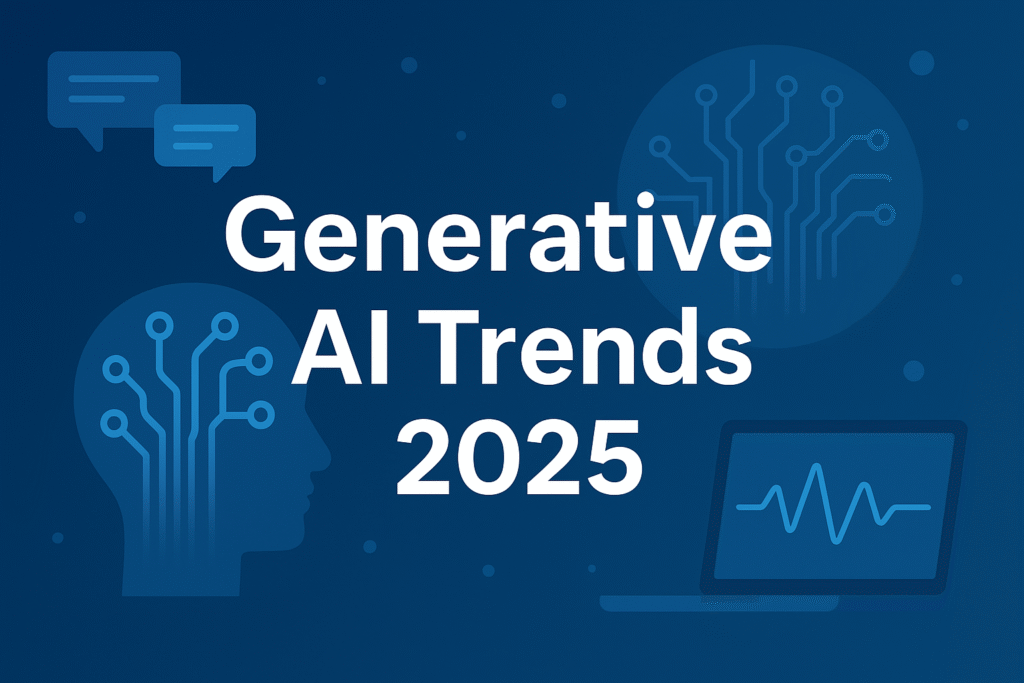
As we step into 2025, Generative AI trends are defining business strategies, content creation, and even government policies. Let’s explore what’s driving this transformation, the opportunities it unlocks, and the challenges we must address.
What Is Generative AI?
Generative AI uses large language models (LLMs) and diffusion models to generate new, original content based on training data. Popular tools include ChatGPT, MidJourney, Google Gemini, and OpenAI’s Sora, each pushing the limits of what’s possible.
Why Generative AI Is Trending in 2025
- Business Adoption at Scale – From marketing automation to customer service chatbots, companies are embracing AI to cut costs and boost efficiency.
- AI Video Generation – Platforms like Sora are revolutionizing video production with cinematic-quality outputs.
- Personalization Power – Retail, healthcare, and travel industries are creating tailored customer journeys using AI.
- Government Regulations – Global frameworks for AI ethics and safety are taking shape.
- Accessible for SMBs – Affordable tools mean startups can now compete with enterprise-level innovation.
Opportunities Generative AI Brings
- For Creators: Faster content creation, more creative options, and wider reach.
- For Businesses: Reduced costs, improved productivity, and stronger customer engagement.
- For Professionals: New jobs like AI trainers, prompt engineers, and AI policy experts are on the rise.
Challenges and Risks
Generative AI is powerful, but it’s not without concerns:
- Misinformation & Deepfakes – Fake media can spread rapidly.
- Data Privacy Issues – Sensitive information may leak into AI datasets.
- Job Automation – Reskilling will be necessary as AI automates repetitive tasks.
Expert Predictions for the Future
- Human-AI Collaboration – AI won’t replace humans but will amplify creativity and productivity.
- Transparent AI Models – Businesses will need to reveal how AI decisions are made.
- AI in Education – Personalized learning powered by AI tutors will scale globally.
How to Use Generative AI in 2025
- Use AI writing tools for blogs, emails, and ad copy.
- Leverage AI design & video tools for quick creative output.
- Add AI chatbots to websites for real-time customer support.
- Stay compliant with ethical AI practices—always fact-check content.
AQs
Q1: What is Generative AI used for in 2025?
Generative AI is used for content creation, marketing, customer support, education, and even video production.
Q2: Is Generative AI safe to use?
Yes, but it must be used responsibly—fact-check content, respect copyright, and ensure data privacy.
Q3: Will Generative AI replace jobs?
AI may automate repetitive tasks, but it also creates new opportunities in AI development, ethics, and strategy.
Q4: Which Generative AI tools are trending in 2025?
ChatGPT, Google Gemini, MidJourney, and Sora are among the most widely used tools this year.
Final Thoughts
Generative AI is more than a trend—it’s a transformative force shaping 2025 and beyond. The winners in this AI-driven era will be those who embrace it responsibly, balancing innovation with trust, and creativity with ethics.
✅ Key Takeaway: Generative AI isn’t replacing humans—it’s empowering us to do more, faster, and smarter.