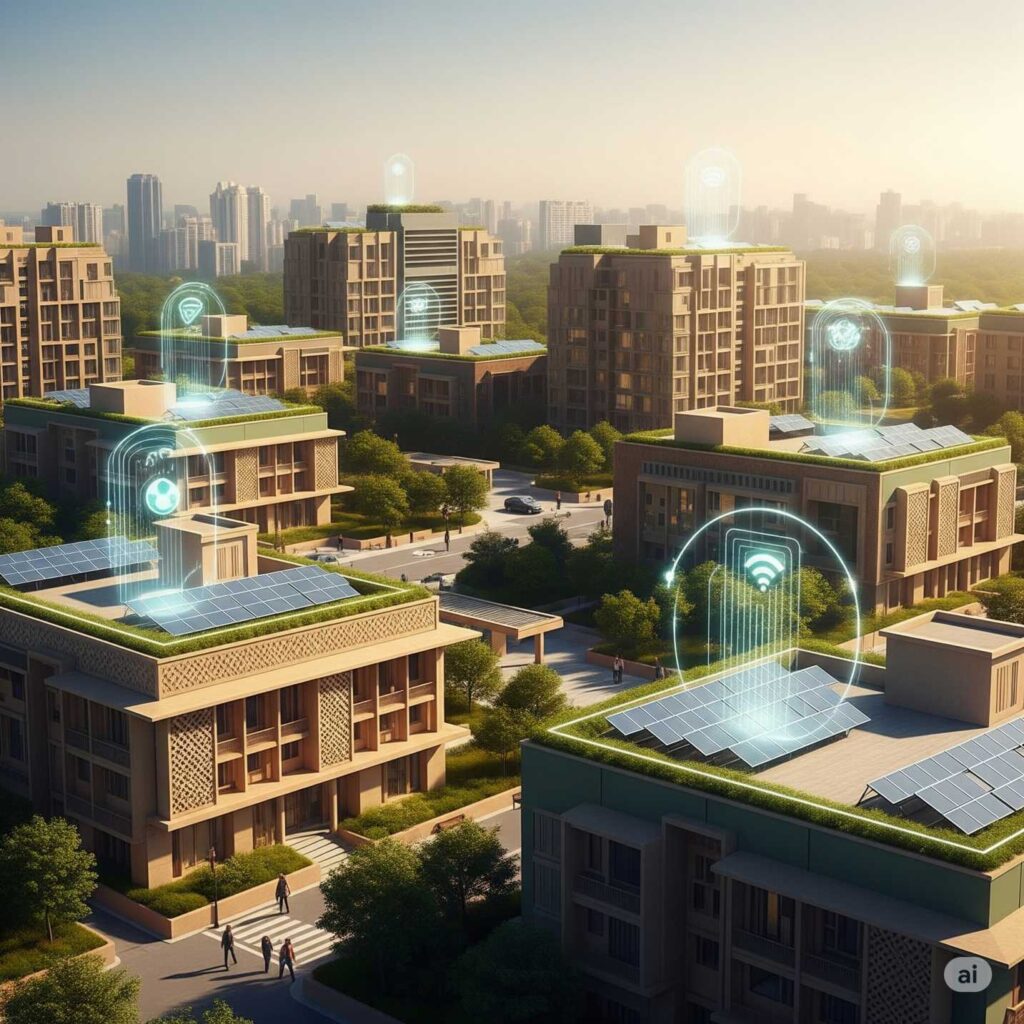
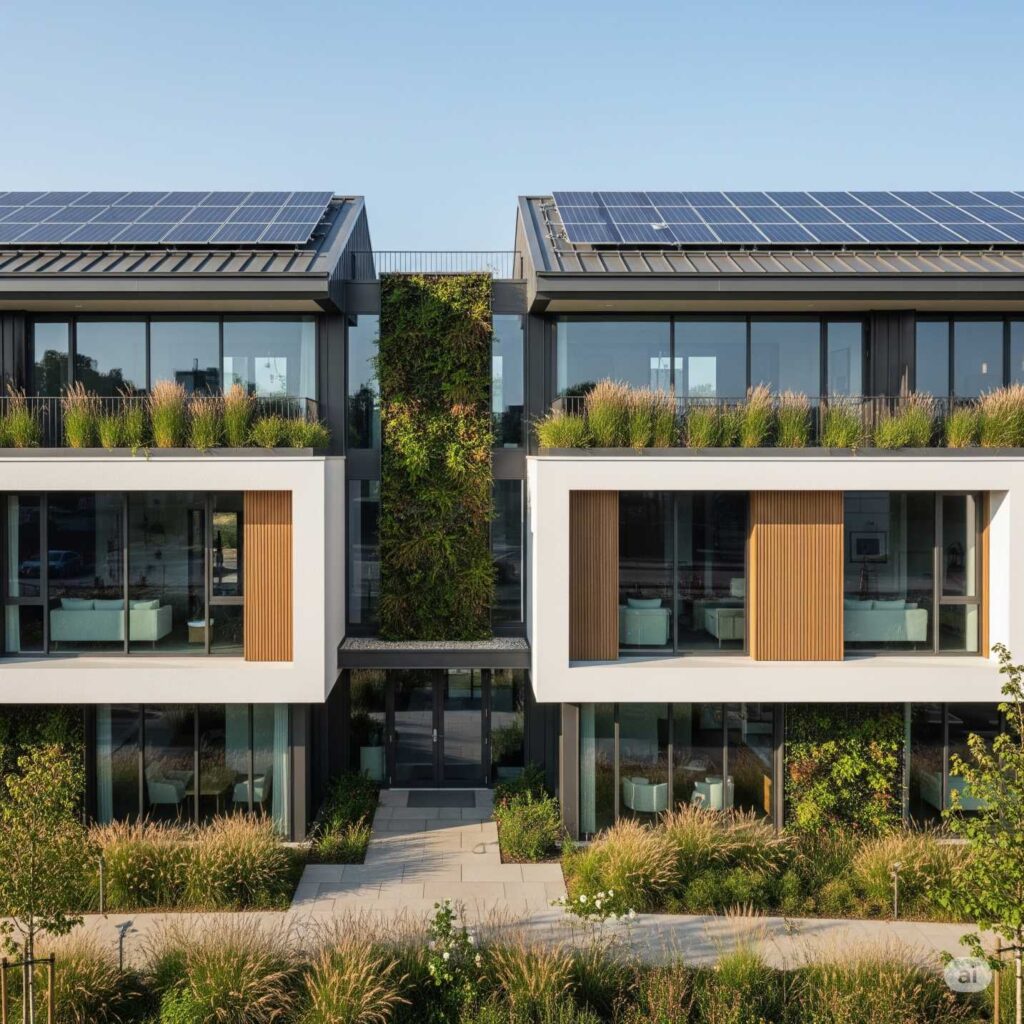
India is now prioritizing eco-friendly real-estate practices in every aspect whether it is construction materials, energy consumption, building design, or even water conservation. The primary reasons why this sector is growing are advanced tech adaptation and government support. However, rising awareness of environment-friendly approaches is leaving no less impact.
Nowaday, construction developers do not only prioritize aesthetics of infrastructures, they are integrating sustainable practices and renewable energy for efficient homes and corporate structures.
Fly-Ash Homes: Sustainable Housing Build With Industrial Waste
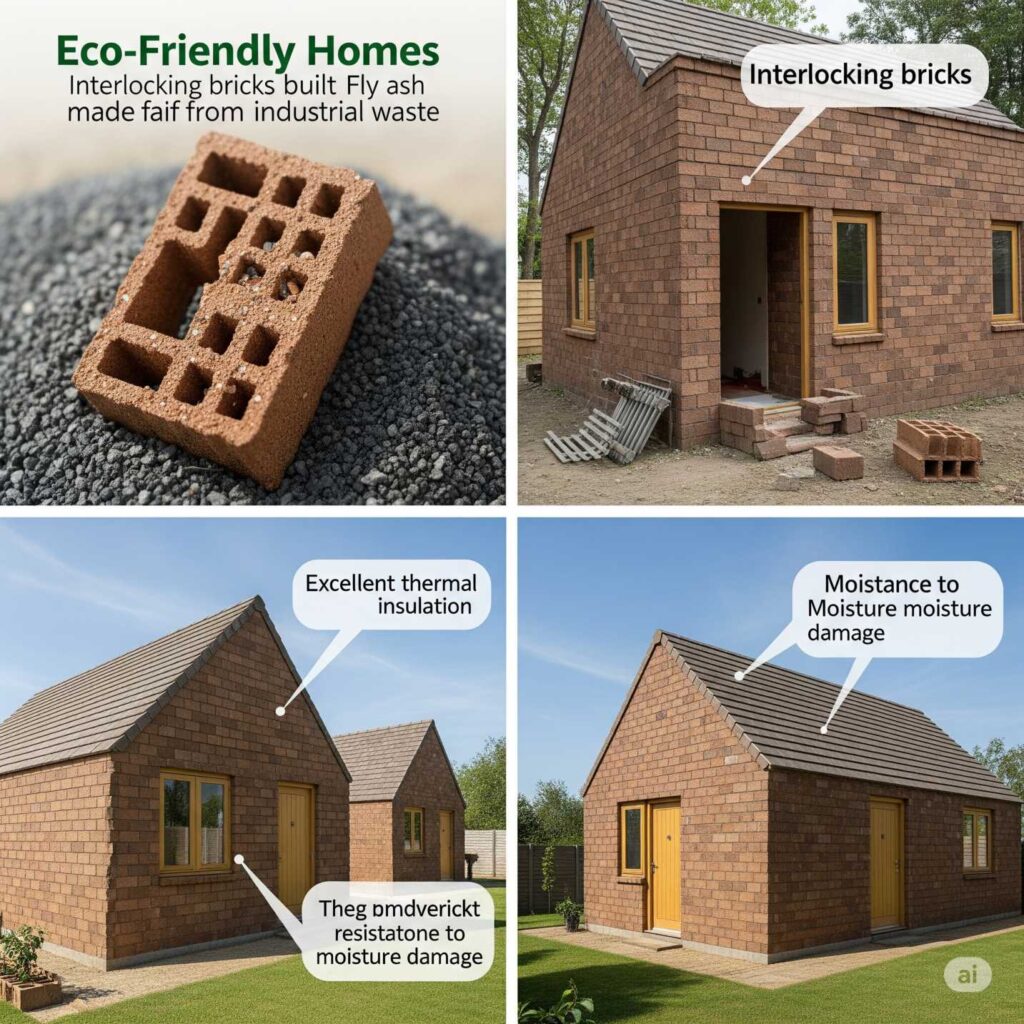
Recently, eco-friendly houses built using fly ash have proven beneficial in two ways. First, they support sustainability, and second, they offer affordability by utilizing industrial waste.
NTPC’s model called “Sukh” is utilizing 80% fly ash and ash residues generated in power plants to build interlocking bricks for outdoor purposes. This kind of construction minimizes the need for traditional materials including cement, sand, plaster, and mortar.
These fly ash bricks are known for offering excellent thermal insulation along with moisture resistant nature. When used indoors, they can regulate temperatures, controlling heating/cooling energy leading to decreased energy usage.
Sustainability Certifications: IGBC & GRIHA Drive Nationwide Uptake
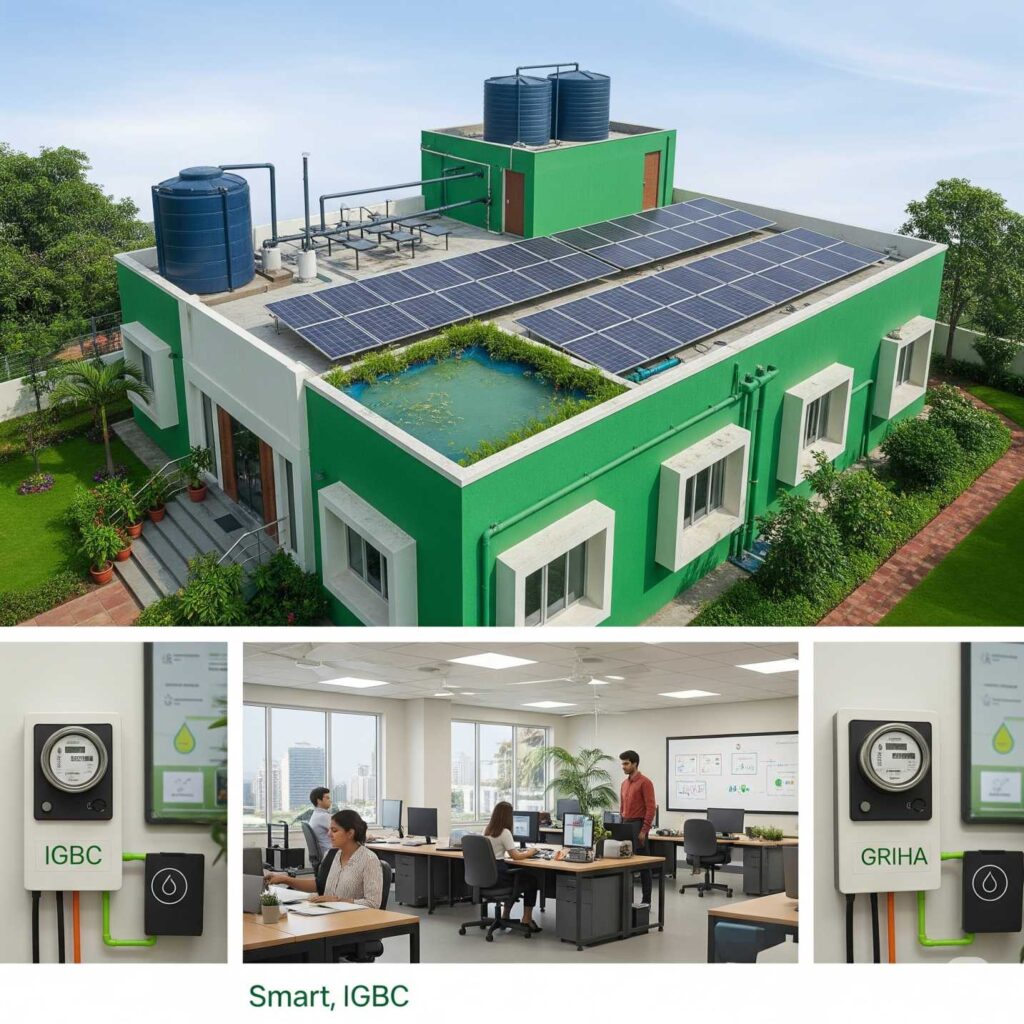
Sustainability certifications are gaining wide adoption in India. Approximately 8,600 IGBC-listed (Indian Green Building Council) projects across India have succeeded in recording water saving around 45,000 kl and 15,000 MWh of energy.
More than 600 buildings in Rajasthan alone have been certified with IGBC rating. On the other hand, IIT-Madras has acquired 4 star GRIHA rating.
These types of green, sustainability certified building structures are generally proven to be consuming 40 to 50 % less energy and 30 to 35% less water consumption compared to traditional buildings.
Net-Zero Building: Solar & Passive Structures Leading the Change
By primarily focusing on energy-saving buildings, India has been leaving an excellent impact on the global construction market. The Indira Paryavaran Bhavan in New Delhi is India’s first on-site net-zero building, reflecting our sustainable construction progress.
There are solar panels, geothermal cooling, advanced HVAC systems, and passive ventilation installed in the Net-Zero building structure. This solar and passive based design helps reduce overall energy consumption up to 40% and saves water up to 55%.
Also, Tata Energy and Resources Institute’s (TERI) campus based in Bangalore is illustrating this concept. There is passive solar building structure with 930 kWp rooftop PV, which helps generate 1.4 million kWh annually.
IoT-Powered Smart Infrastructures
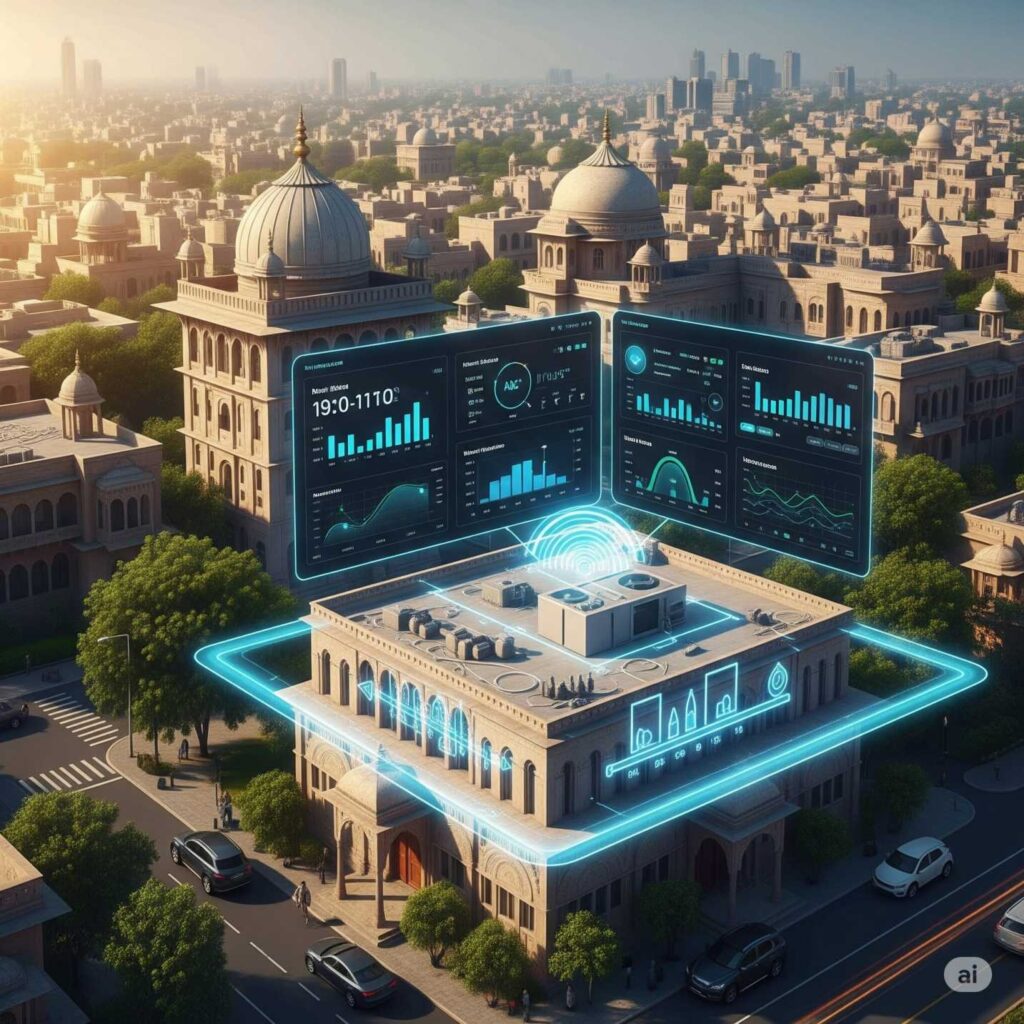
IoT powered construction is just going to be very impressive in India. Nowadays, IoT systems are optimizing HVAC systems, water usage, lighting, as well as ventilation in real-time. Equipped with AI and sensors, these IoT-powered smart systems can be adjusted to climate patterns building structures.
The AI-driven HVAC units have alone delivered 15.8% energy savings and around 37 metric tons emission reduction per building, each year.
Sustainability in the construction industry in India is taking the lead in the past couple of years. It is a great sign in terms of our responsibility toward eco-friendly construction. The IoT and AI integration into real estate construction and operations is helping us engineer a green and better future.